Book with confidence — certified courses only
STCW Medical Care is an advanced maritime training designed for seafarers who need to act confidently and effectively during serious medical emergencies at sea. The course prepares you to provide extended medical care when professional help is not immediately available.
| Price | €939 excl. VAT |
| Timetable | 2 days |
| Certification | STCW Medical Care |
| Validation | 5 years |
| Requirements | To participate in the STCW Medical Care training, candidates must hold a valid STCW Basic Safety Training certificate issued within the last five years, as well as a valid STCW Medical First Aid certificate that is also no older than five years. |
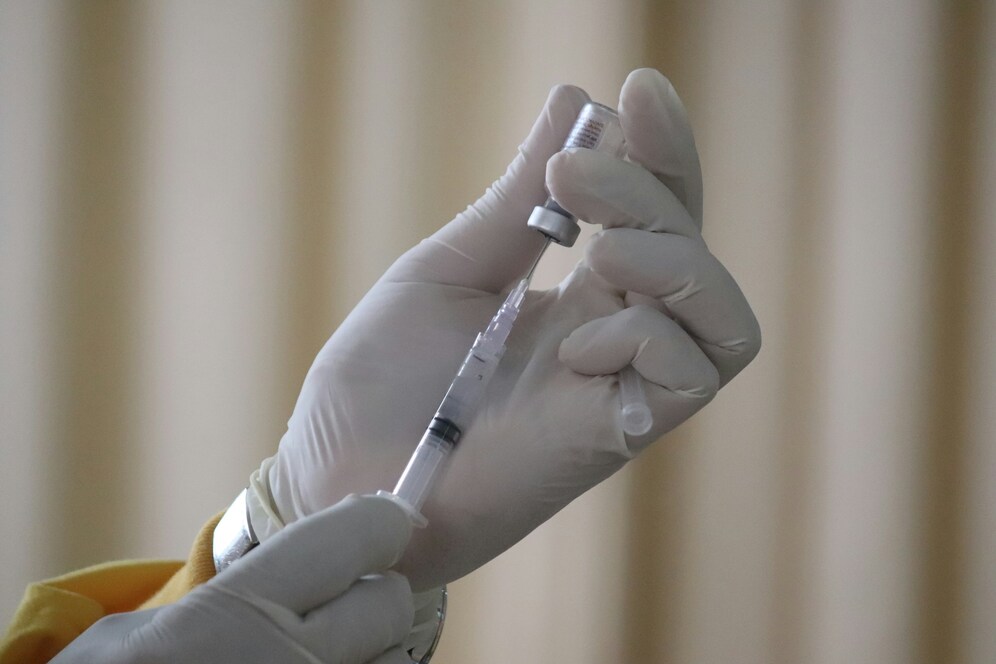
The STCW Medical Care training prepares participants to take responsibility for providing advanced medical care on board a vessel. The course focuses on diagnosing and treating medical conditions at sea when professional medical assistance is not immediately available, in accordance with the requirements of STCW Table A-VI/4-2.
You will attend this training at EC-MT Rotterdam.
Visit the center profile for practical information, directions and the full course offering at this location.
Directions
ECMT offers certified STCW, GWO and NOGEPA training with a strong emphasis on medical skills...
Rotterdam, NL Brielselaan 85
The STCW Medical Care course expands on the knowledge gained in Medical First Aid and focuses on advanced onboard medical treatment. Participants develop practical skills such as treating and closing wounds, administering intravenous fluids, performing cardiopulmonary resuscitation, and managing medical evacuation procedures.
This training is particularly relevant in situations where a vessel operates far from shore or when evacuation of an injured or ill person cannot be arranged quickly. You will learn how to stabilize patients, make well informed medical decisions, and communicate effectively with shore based medical services.
For operations within Dutch territorial waters or adjacent coastal zones, holding at least a valid STCW Medical First Aid certificate is mandatory. When sailing beyond these areas, a valid STCW Medical Care certificate is also required to meet international regulations and ensure adequate medical support on board.
This is an advanced STCW course that builds on the Medical First Aid training by adding broader medical competencies. Participants learn skills such as wound suturing, setting up intravenous lines, performing resuscitation, and coordinating medical evacuation. The training prepares seafarers to manage serious medical emergencies, particularly in situations where professional medical help is far away or evacuation cannot take place quickly.